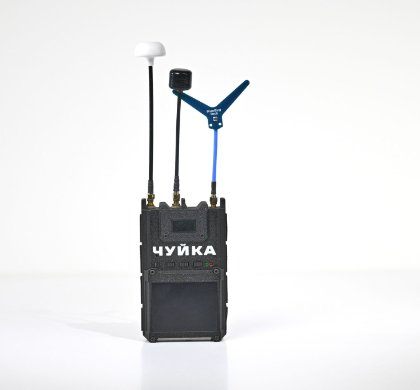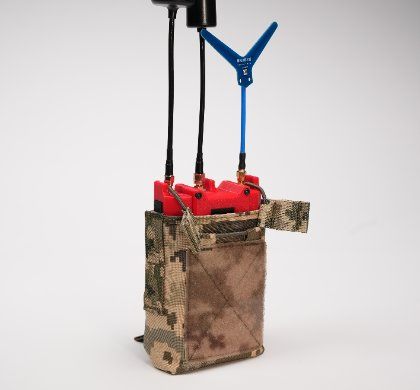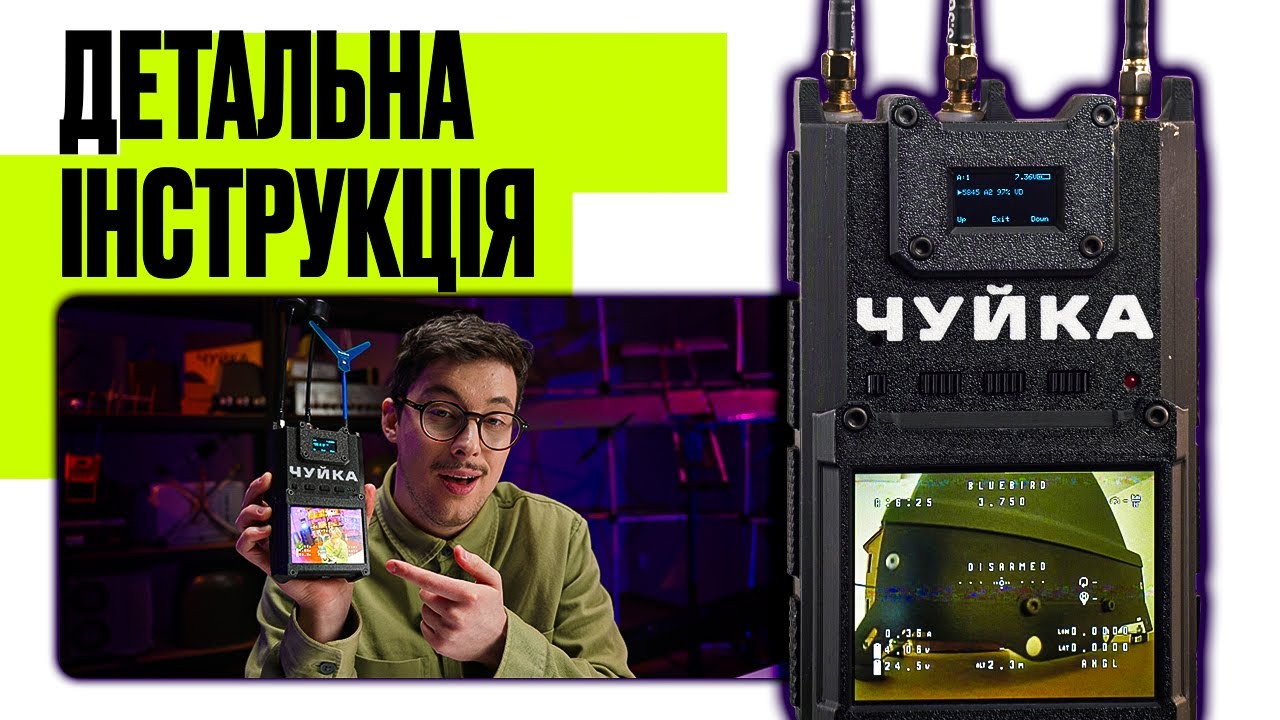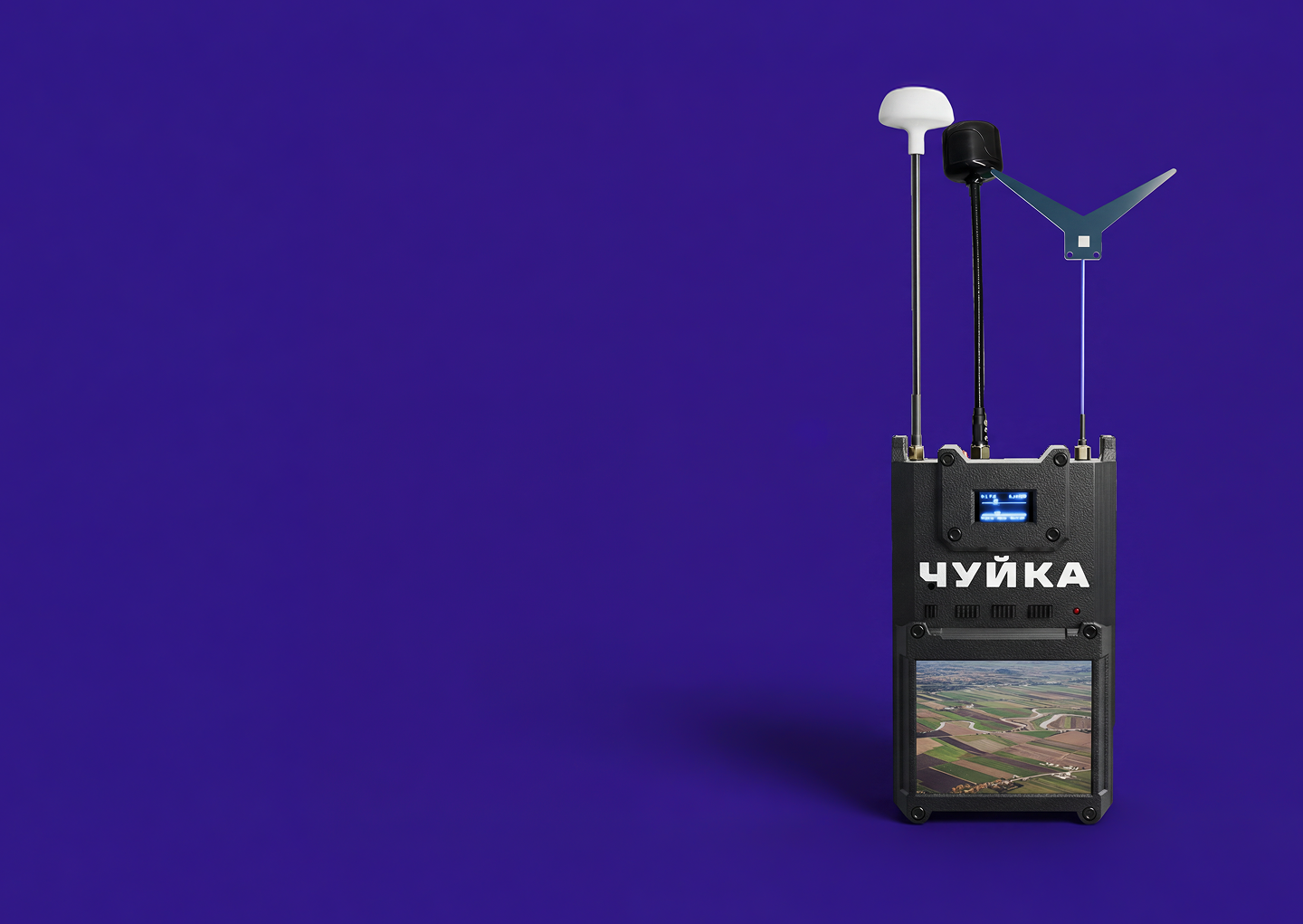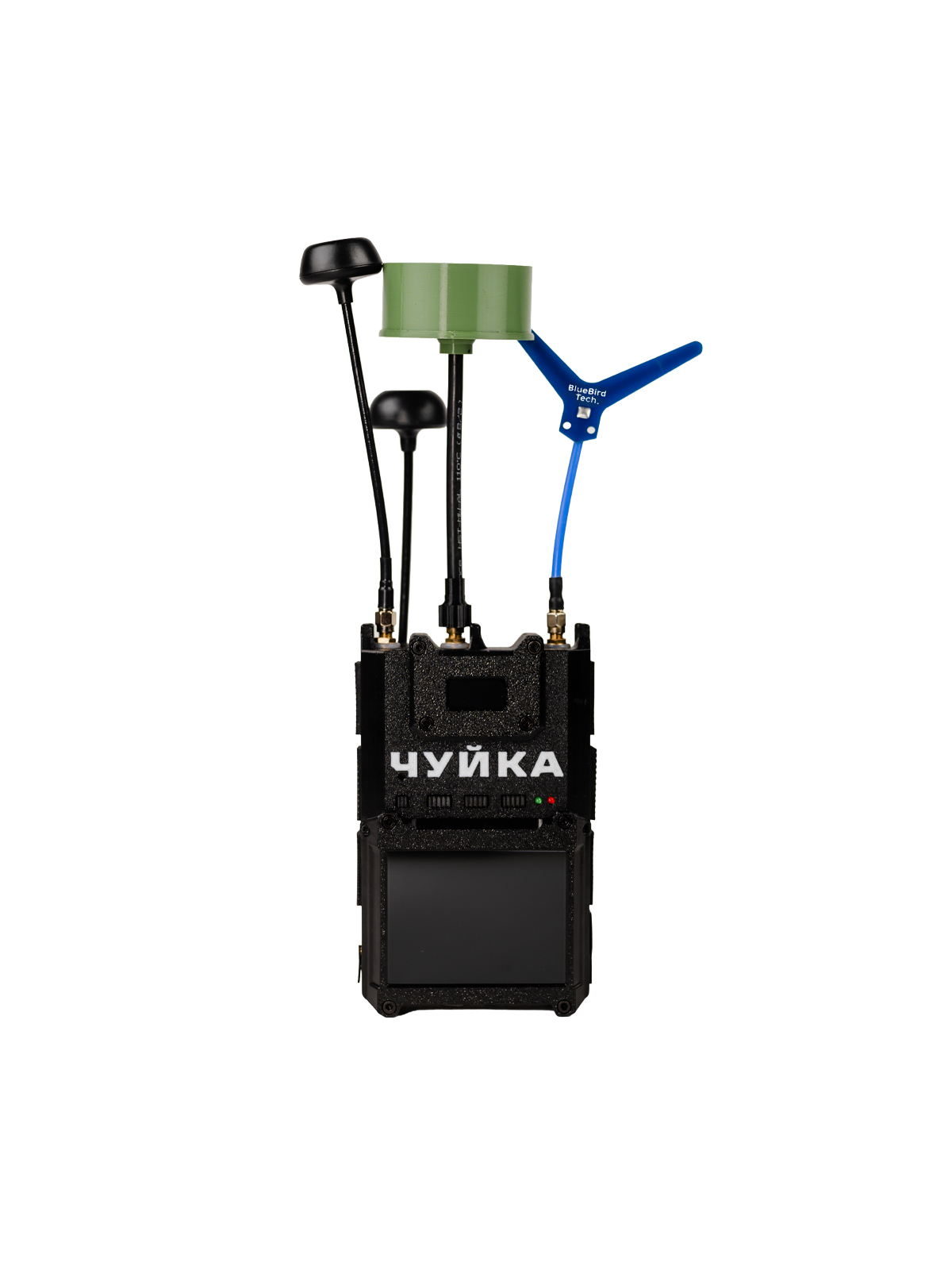
Electronic intelligence device “Chuyka 4.0”
- Frequency bands 1.2 / 3.3 / 5.8 / 8.6 GHz
- Signal types Analog
- Battery capacity 4500 + 5000 mAh
- Housing protection IP54

A drone detector is a personal electronic intelligence device that detects UAV activity by identifying their analog video signals. It operates without emitting signals (passive mode) and provides early threat detection.
“Chuyka” drone detectors and compatible accessories for expanding their functionality and adapting them to various operating conditions.
Drone detectors are designed to passively detect FPV UAVs using their analog video signals. They emit no signals and do not reveal the user’s position, providing early warning of drone presence in the radio spectrum.
FPV drones are actively used for reconnaissance and strikes. A drone detector allows you to:
Not sure which model or accessories are right for your specific task?
Contact us – we will help you choose the optimal solution and explain the technical details in simple terms. Phone: +38 073 864 04 07 For security reasons, please use only the official communication channels listed on the website.
A drone detector is an electronic surveillance device that detects UAV activity by identifying their video signals. It provides early warning about the presence of an FPV drone or other UAV in the operating area, allowing a timely response to a potential threat.
The detector operates in passive mode and scans the radio-frequency bands used to transmit analog FPV drone video signals. Once a signal is detected, the device notifies the user through audio and visual indicators and displays the intercepted video feed on the screen.
No. “Chuyka” drone detectors operate in passive mode and do not emit radio signals. This allows the device to be used without additionally revealing the user’s position.
The device is designed to detect FPV drones and other UAVs that transmit analog video signals within supported frequency ranges. Detection effectiveness depends on the type of signal, terrain conditions, and the operational characteristics of the UAV.
The “Chuyka 3.0” drone detector operates in the 1.2 GHz, 3.3 GHz, and 5.8 GHz frequency bands. This allows it to detect a wide range of FPV drones that use analog video transmission.
The “Chuyka 2.0” model supports the 1.2 GHz and 5.8 GHz frequency bands. The device provides early detection of FPV drone activity and is suitable for individual use.
The maximum detection range can reach up to 4 km, depending on the device model, signal type, UAV flight altitude, and environmental conditions. The actual operating distance may vary depending on terrain and the presence of obstacles.
In the “Chuyka 3.0” model, the automatic scanning cycle takes between 4 and 8 seconds. This allows for rapid detection of activity within the monitored frequency bands.
Yes. Drone detectors can be used in vehicles and other types of transport. For convenient installation, special vehicle mounts are available, allowing the device to be quickly installed and removed.
A remote antenna helps improve signal reception quality and increases the effectiveness of the detector. It can be installed away from the user or positioned higher to reduce the impact of interference.
No. “Chuyka” detectors are designed for quick field deployment. After connecting the antennas and powering on the device, it is ready for use and automatically begins scanning the supported frequencies.
Drone detectors are used by military units, vehicle crews, mobile groups, and other users who require timely detection of UAV activity. These devices help improve situational awareness of the airspace and enable rapid response to potential threats.
The main difference is the number of supported frequency bands. “Chuyka 2.0” operates in two bands—1.2 and 5.8 GHz—while “Chuyka 3.0” additionally supports 3.3 GHz. “Chuyka 3.0” also includes an automatic scanning function and extended signal detection capabilities.
The “Chuyka” drone detectors, as well as compatible accessories and components, can be purchased through official BlueBird Tech channels. When selecting a model, it is important to consider the required frequency bands, operating conditions, and the necessary set of accessories.