


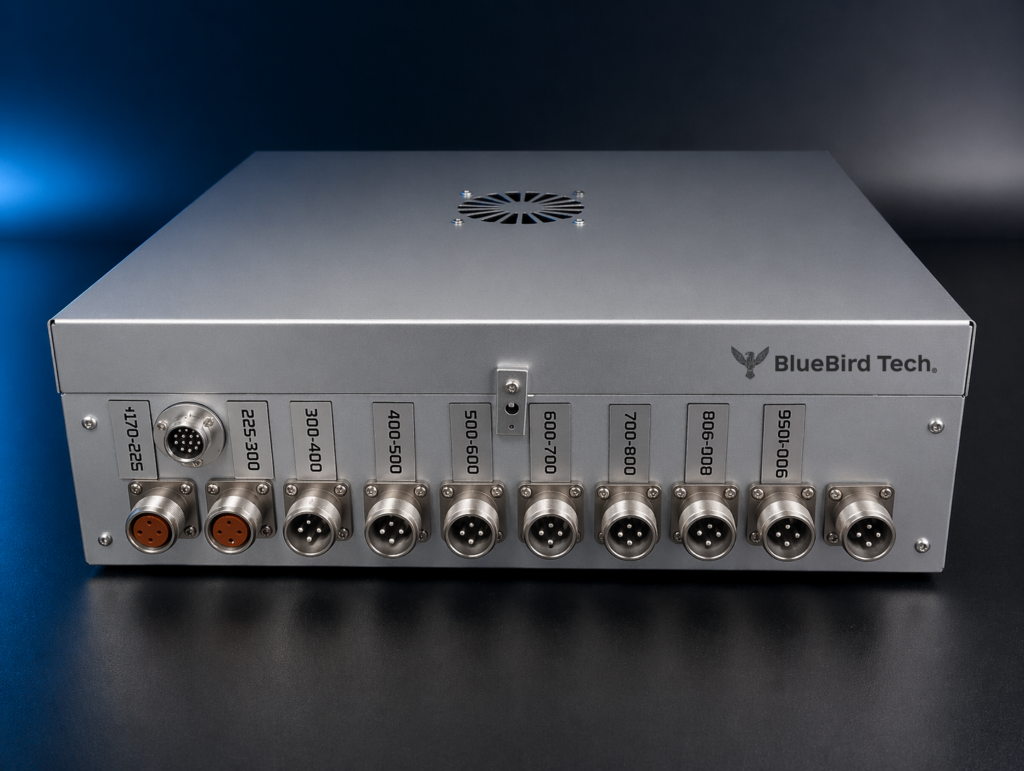
Modular EW Hrets XL
“Hrets XL” is a modular EW system designed to protect against FPV drones, enabling the creation of a signal suppression zone around an объект or…


Trench EW systems are stationary electronic warfare systems designed for rapid deployment in positions and suppression of control, video transmission, and communication channels of FPV drones and UAVs, forming a local protective interference zone around a fortification, observation post, or unit.
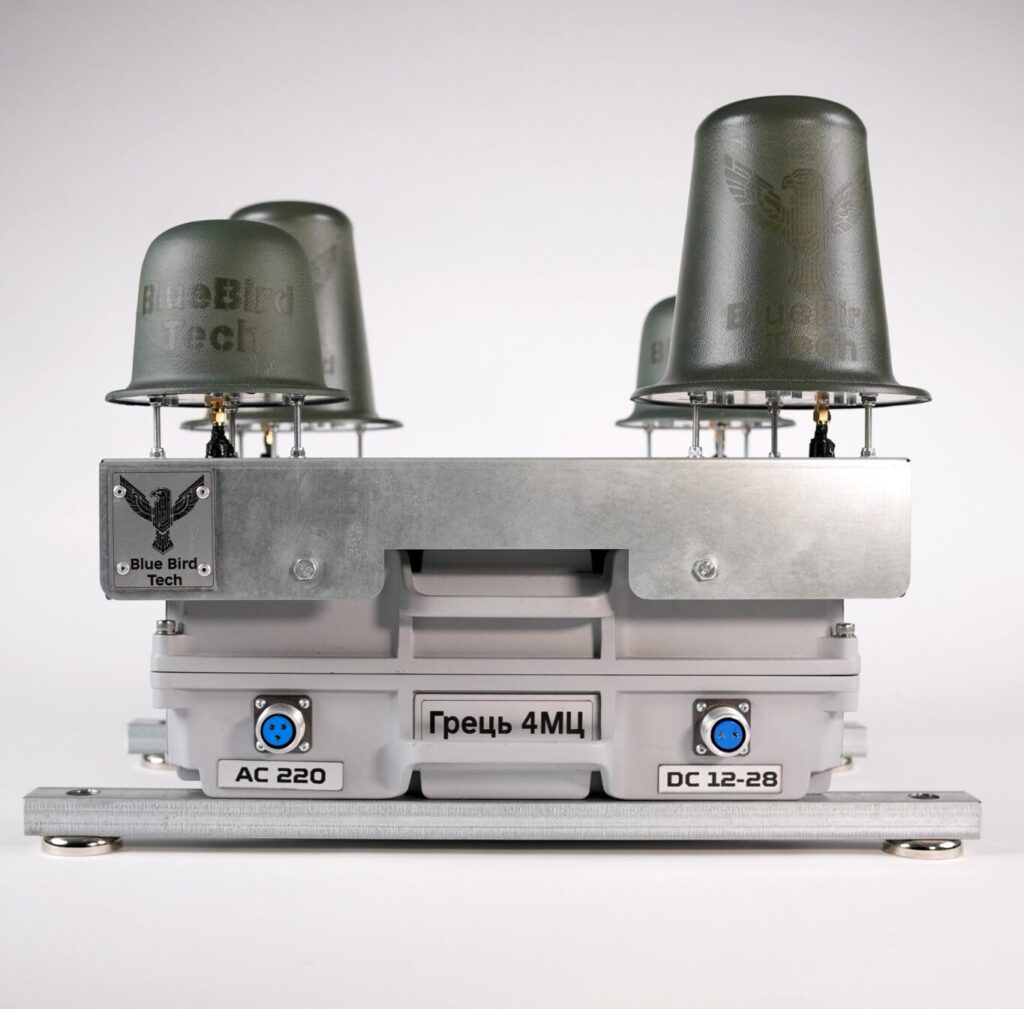
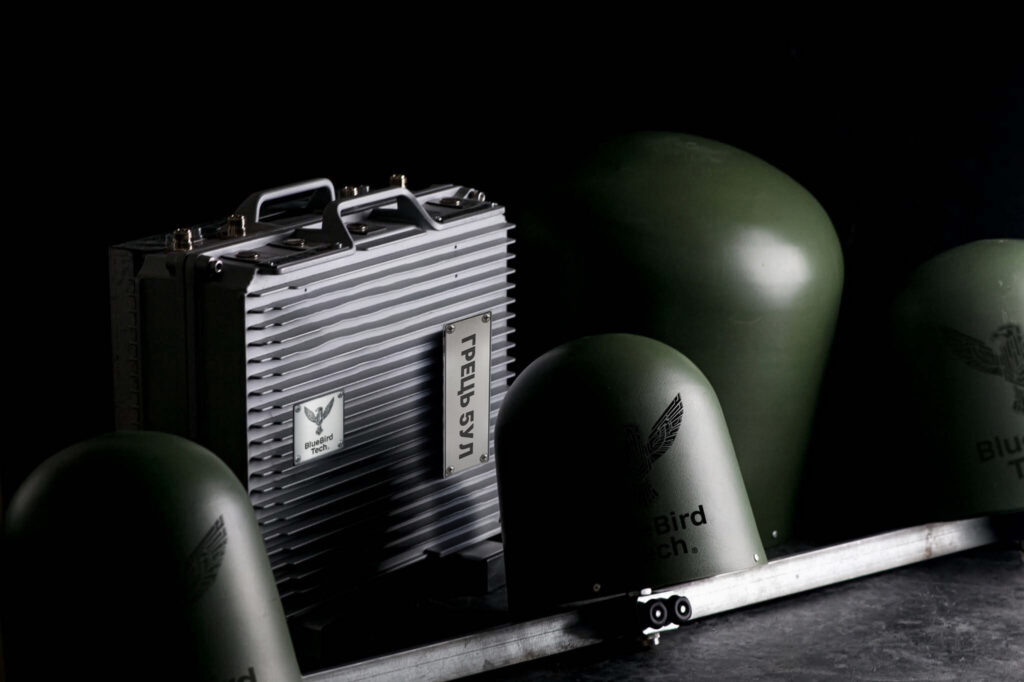
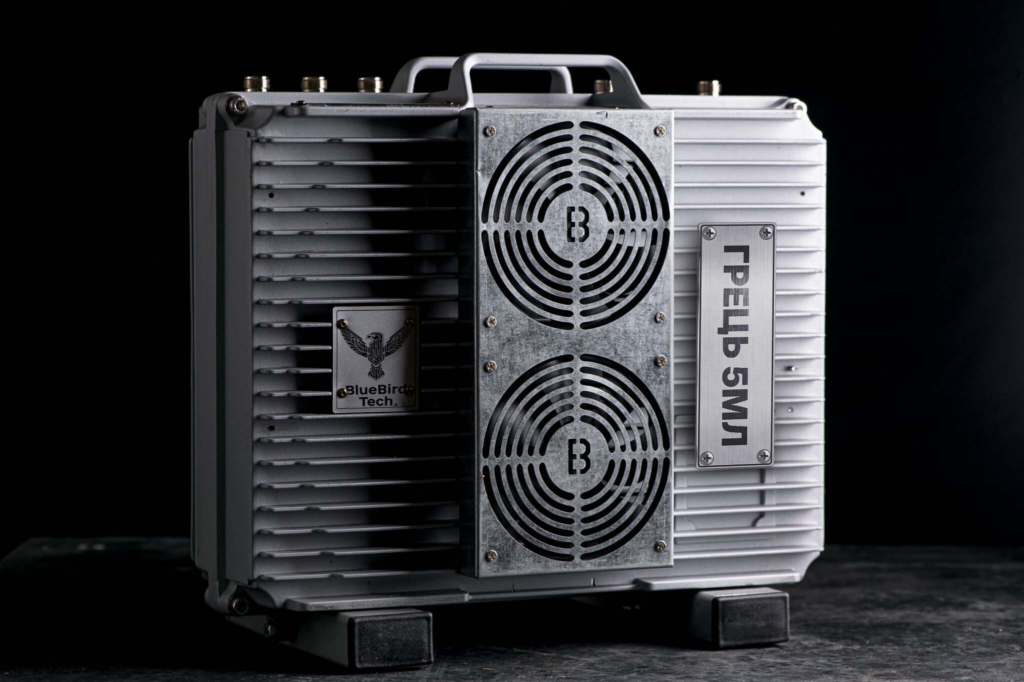
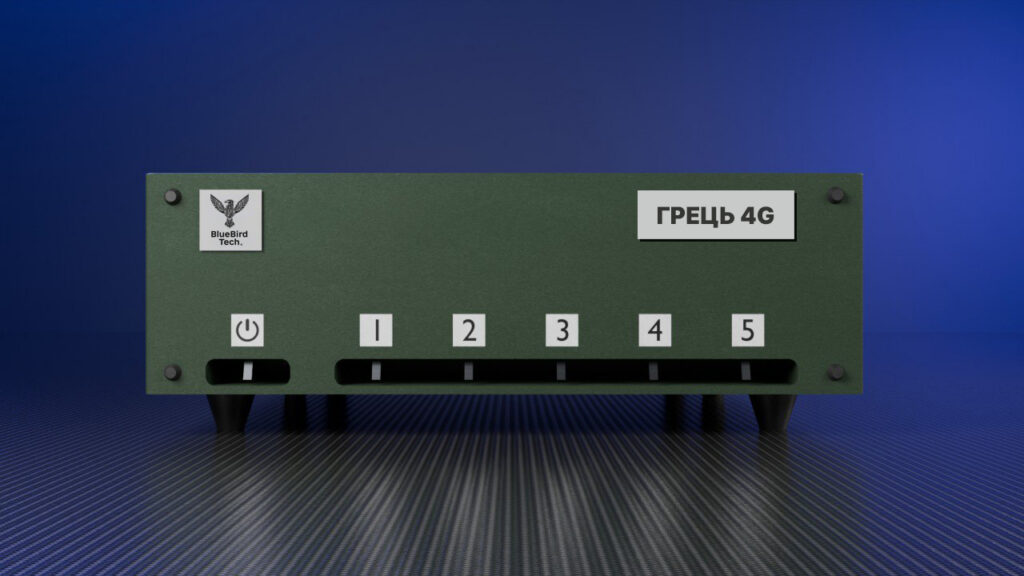
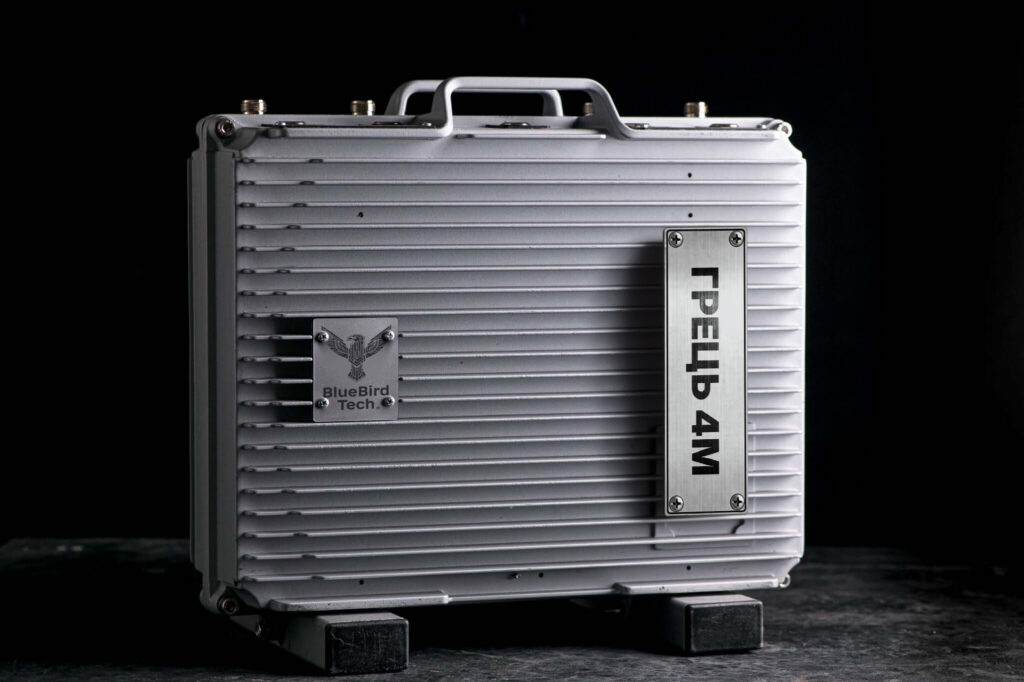
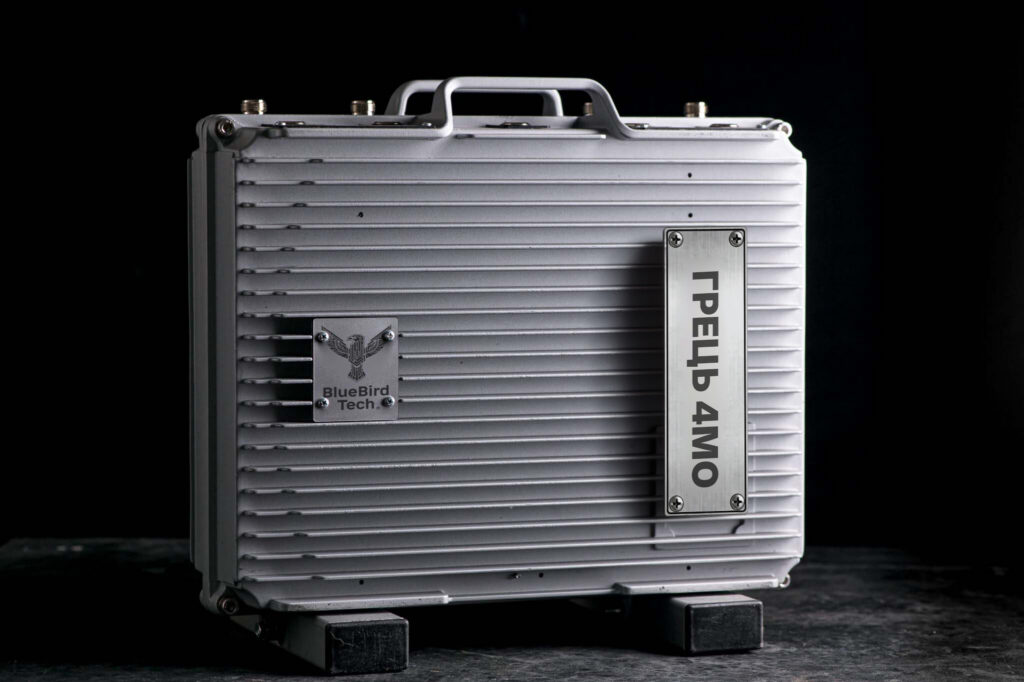
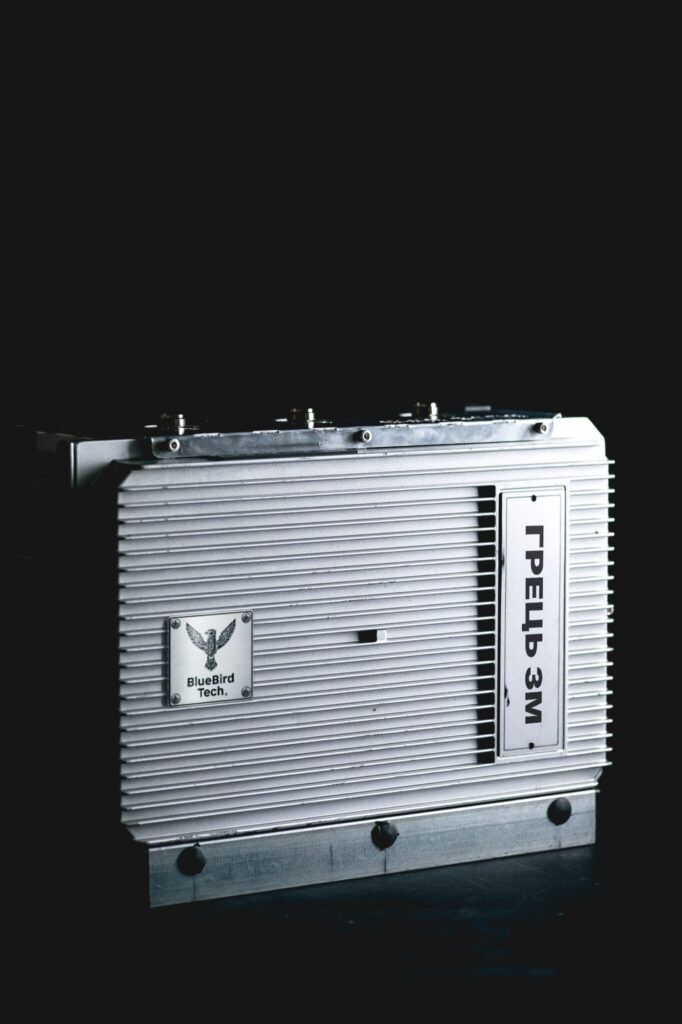
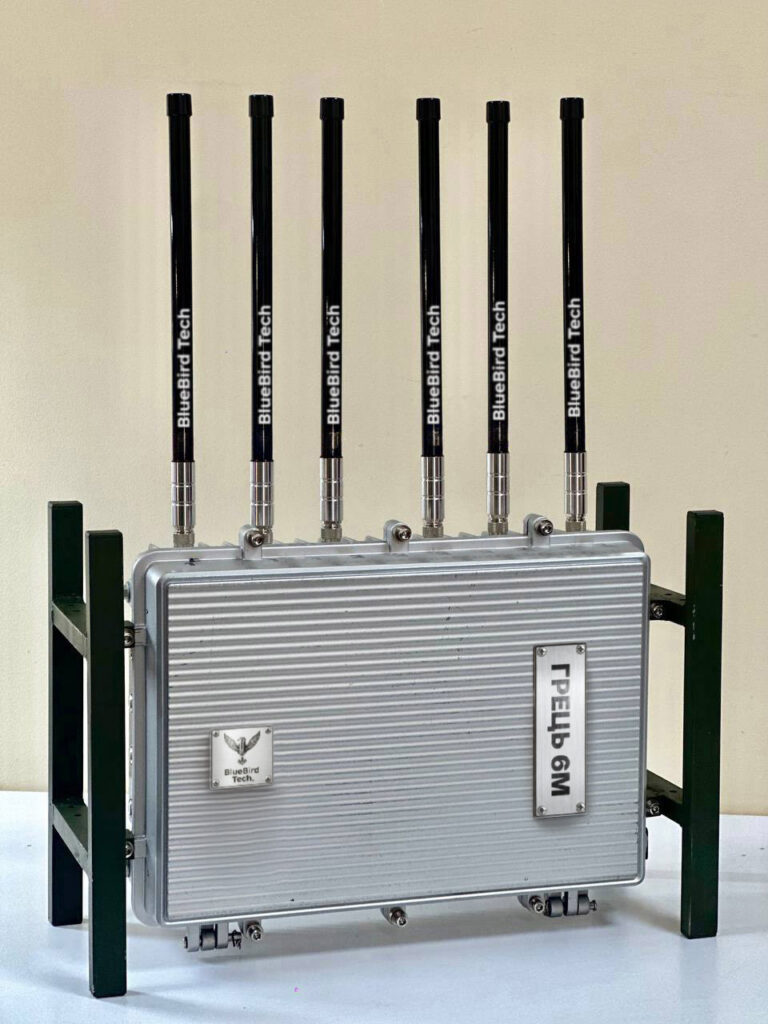
A trench EW system is an electronic warfare device designed for deployment directly at positions, in bunkers, fortifications, or near vehicles. It creates a local radio-jamming field across designated frequency bands and disrupts the control, video transmission, or communication channels of FPV drones and other UAVs.
A trench EW system creates a local radio-jamming zone around its installation point. After activating all or selected frequency bands, the equipment interferes with the drone’s control, video transmission, and communication channels. As a result, the drone may lose a stable connection with its operator and fail to complete its mission.
Depending on the model and operating frequency bands, an EW system can be used to counter FPV drones, DJI Mavic quadcopters, and UAVs that use mobile communication channels. The EW Hrets 4MO provides protection against FPV drones at a distance of 70–400 m, while the EW backpack “AntiDrop” is designed to neutralize DJI Mavic drones within a 50–100 m radius, depending on operating conditions.
Systems that create a local jamming zone around the deployment point are used to protect positions. The EW system Hrets 5UL is designed to provide protection against FPV drones in the 170–600 MHz range, while the EW signal suppression system Hrets 5ML can disrupt signals at distances of up to 400 m, depending on the terrain and antenna type.
Trench EW systems are used to protect:
This equipment creates a local jamming zone around a specific deployment point.
To counter DJI Mavic quadcopters, systems are used that operate across the frequency bands employed by these drones for control and video transmission. The Anti-drop EW Hrets 4MC supports dual frequency bands of 2360–2500 MHz and 5725–5850 MHz for disrupting control and video transmission channels. The EW backpack “AntiDrop” can also be used for mobile protection against DJI Mavic drones in field conditions.
Certain EW systems have NATO codification for official use within military structures. These include the EW Hrets 4MO for countering FPV drones and the anti-drop EW Hrets 4MC for countering DJI Mavic quadcopters. NATO codification simplifies the procurement and inventory management of the equipment.
Yes. A trench EW system can be installed near vehicles or equipment to create a local signal-jamming zone. The specific model should be selected based on the types of drones involved, relevant frequencies, required protection range, power source, and deployment conditions. A trench EW system does not replace camouflage, physical protection, or drone detection systems. Instead, it serves as one element of a comprehensive protection strategy.
When choosing a system, determine:
Before you buy a trench EW system, it is recommended to provide this information to a specialist who can help select the appropriate model and configuration.
The price depends on the number of frequency channels, module power, operating bands, design, antenna type, power supply format, and configuration.
When searching for the price of trench EW systems, it is worth comparing not only the cost of individual models but also the types of threats they are designed to counter. Compact systems such as Hrets 3M are less expensive than high-power Hrets 6M systems or modular Hrets XL solutions. The final price also depends on the configuration and additional equipment.
The effectiveness of EW systems is influenced by the frequency range, antenna type, terrain, UAV flight altitude, and distance to the drone operator. Proper antenna placement and selecting the appropriate jamming-channel configuration are also important. In challenging conditions, multichannel or high-power systems may be used to create a denser radio-jamming field.
You can purchase EW systems Hrets, UAV jamming equipment, and portable systems through the official BlueBird Tech website and authorized sales channels. The catalog includes Hrets 3M, Hrets 4MO, Hrets 4MC, Hrets 5ML, Hrets XL, and other systems designed to counter FPV drones and DJI Mavic quadcopters.
Trench EW systems (electronic warfare systems) are designed to protect positions, fortifications, observation posts, and equipment from FPV drones. Once deployed, a trench EW system creates a radio-jamming field across the required frequency bands and interferes with the drone’s control, video transmission, or communication channels.
Trench EW systems are used where a protective zone needs to be created around a specific location. They can help disrupt drone control, interrupt video transmission, and reduce the effectiveness of UAV operations over a position. Such anti-drone EW systems can be stationary, compact, portable, or modular. Key advantages include rapid deployment, selection of the required frequency bands, and adaptation to current threats.
The category includes systems Hrets designed to counter FPV drones, DJI Mavic quadcopters, and UAVs that use mobile communication channels. The models differ in operating frequencies, number of channels, power output, weight, power consumption, and power supply method.
Compact Hrets 3M and Hrets 4M systems are suitable for local protection, Hrets 6M offers higher power, while the modular Hrets XL allows users to configure the system for the required frequency bands. Before you buy a trench EW system, determine the drones’ operating frequencies and the required jamming coverage area.
Trench EW systems are used by military units at forward positions, mobile and assault groups, observation post teams, and vehicle crews. The equipment is deployed near trenches, bunkers, fortifications, field installations, or vehicle staging areas.
For mobile applications, the EW backpack “AntiDrop” can be used. Equipment effectiveness depends on the terrain, UAV flight altitude, antenna type, and how well the operating frequencies match the drone’s channels.
BlueBird Tech offers systems Hrets with different frequency configurations and deployment formats. You can choose a trench EW system designed to counter FPV drones, DJI Mavic drones, or mobile communication channels.
The BlueBird Tech team can help you select the appropriate model, configuration, power source, and compatible accessories. To buy a trench EW system, contact the company through its official channels to check the price and availability of a specific model.


Увійдіть тим самим акаунтом, що й у застосунку Чуйка та програмі Blue Coins.


