logo-mobile
Меню
close
Academy arrow
Cart (0)
close

EW systems Hrets for protection against drones

EW systems are electronic warfare solutions designed to disrupt the control, video transmission, and communication channels of FPV drones and UAVs. Depending on operating conditions and configuration, these systems can protect positions, vehicles, mobile groups, observation posts, and other assets by creating a local radio-jamming zone. 

cat icon

“Hrets” EW systems for protection against drones

EW systems for neutralizing FPV drones and enhancing the protection of frontline personnel.

Modular EW Hrets XL

Modular EW Hrets XL

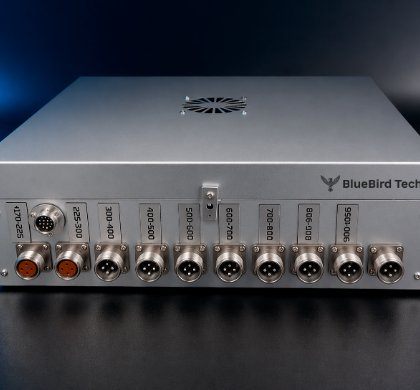
“Hrets XL” is a modular EW system designed to protect against FPV drones, enabling the creation of a signal suppression zone around an объект or…
  • Frequency bands: optionally 170–1050 MHz, 2080–2720 MHz
  • Protection: ІР 55
  • Neutralization: FPV drone
  • Module power consumption: up to 130 W
2 667 $
* price with VAT
2 223 $
* Price excluding VAT
Request a quote
codification Has NATO codification Anti-drop EW Hrets 4MC

Anti-drop EW Hrets 4MC

“Hrets 4MC” is an EW system designed to counter DJI Mavic drones, providing neutralization of control and video transmission channels within the device’s operational area.
  • Frequency bands: dual 2360–2500 MHz and 5725–5850 MHz
  • Weight: <12 kg
  • Neutralization: DJI Mavic drones
  • Module power consumption: 50 W
3 055 $
* price with VAT
2 545 $
* Price excluding VAT
Request a quote
EW system Hrets 5UL

EW system Hrets 5UL

“Hrets 5UL” is an EW system designed for protection against FPV drones, creating a signal suppression field around the deployment point or protected object.
  • Frequency range: 170–600 MHz
  • Protection: ІР 55
  • Neutralization: FPV drones
  • Module power consumption: 50 W
6 109 $
* price with VAT
5 091 $
* Price excluding VAT
Request a quote
EW signal suppression system Hrets 5ML

EW signal suppression system Hrets 5ML

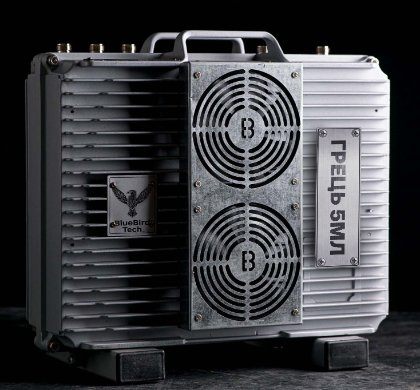
“Hrets 5ML” is an EW system designed to suppress FPV drones, creating a protective zone at distances of up to 400 m depending on operating…
  • Frequency range: 350–700 MHz
  • Weight: 12 kg
  • Neutralization: FPV drones
  • Power consumption: up to 750 W
5 427 $
* price with VAT
4 523 $
* Price excluding VAT
Request a quote
UAV signal suppressor Hrets 4G

UAV signal suppressor Hrets 4G

“Hrets 4G” is a UAV communication jammer that blocks data transmission and control signals within a radius of up to 10–40 m indoors and from…
  • Frequency bands: 850–965 MHz / 1805–1990 MHz / 2110–2180 MHz / 2360–2505 MHz / 2570–2690 MHz.
  • Neutralization: UAV communication channels — CDMA, GSM, 2G, 3G, 4G
  • Module power consumption: up to 130 W
3 955 $
* price with VAT
3 295 $
* Price excluding VAT
Request a quote
Light EW Hrets 4M

Light EW Hrets 4M

“Hrets 4M” is a lightweight EW system designed to counter FPV drones, providing signal suppression at distances of 70–400 m.
  • Frequency bands: 470–530 MHz and 700–1050 MHz (4 bands)
  • Neutralization: FPV drones
  • Weight: 12 kg
  • Power consumption: up to 600 W
4 118 $
* price with VAT
3 432 $
* Price excluding VAT
Request a quote
codification Has NATO codification EW Hrets 4MO

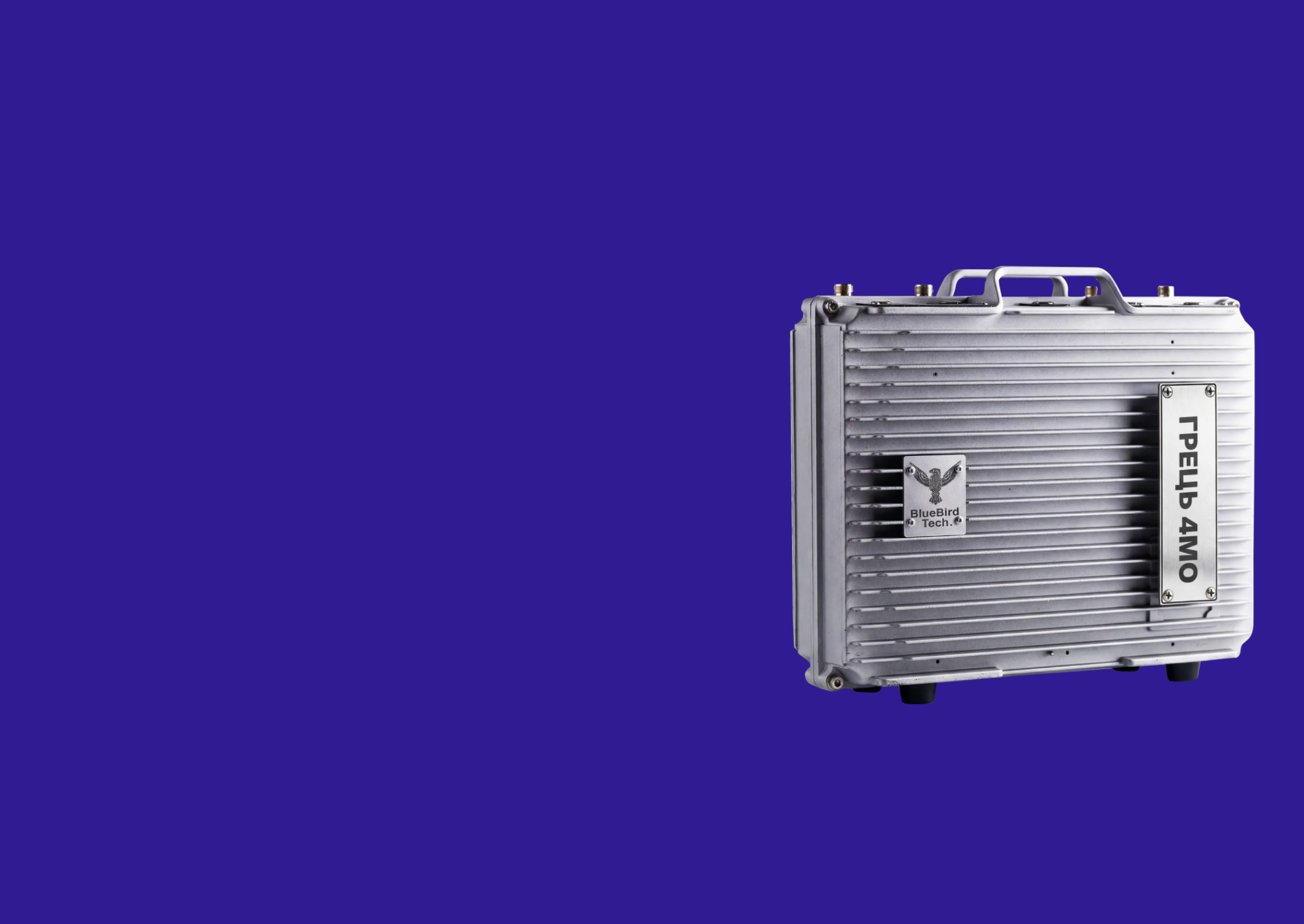
EW Hrets 4MO

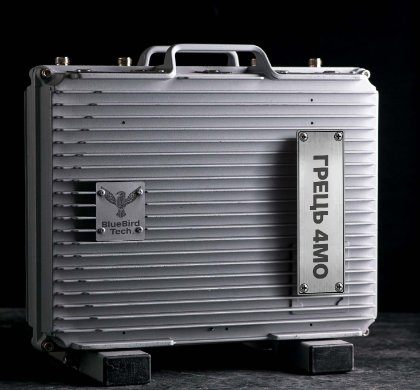
“Hrets 4MO” is an EW system designed to protect against FPV drones, with a neutralization zone of 70–400 m depending on operating conditions.
  • Frequency bands: 450–530 MHz and 700–1050 MHz (4 bands)
  • Neutralization: FPV drones
  • Weight: 12 kg
  • Power consumption: up to 600 W
4 118 $
* price with VAT
3 432 $
* Price excluding VAT
Request a quote
Compact drone jammer Hrets 3M

Compact drone jammer Hrets 3M

“Hrets 3M” is a compact FPV drone jammer designed to protect positions, with a suppression zone of 70–400 m.
  • Frequency bands: 700–1050 MHz (3 bands)
  • Neutralization: FPV drones
  • Weight (without battery): 6 kg
  • Power consumption: up to 500 W
3 191 $
* price with VAT
2 659 $
* Price excluding VAT
Request a quote
High-power EW Hrets 6M

High-power EW Hrets 6M

“Hrets 6M” is a high-power EW system designed to counter FPV drones, providing stable signal suppression at distances of 70–400 m.
  • Frequency bands: x2 700–1050 MHz (dual bands)
  • Neutralization: FPV drones
  • Weight (without battery): 10 kg
  • Power consumption: 900 W
5 836 $
* price with VAT
4 864 $
* Price excluding VAT
Request a quote
image-bg

How to choose an EW system

How to choose an EW system for your task

EW systems create a localized signal suppression zone around an object, position, vehicle, or route of movement. The choice of model depends on the type of drones posing a threat, the required frequencies, operating conditions, and the needed protection radius.

01

Why EW systems are needed in modern conditions

FPV drones, quadcopters, and various types of UAVs are now widely used in attacks. An EW system allows you to:

  • reduce the effectiveness of drones over an object;
  • complicate or completely block drone control;
  • disrupt video transmission and communication links;
  • increase the safety of personnel, equipment, and positions;
  • create a localized protective zone at the deployment site or during movement.
02

Who EW systems are suitable for and how they are used

  1. Units on forward positions, for local protection of personnel, fortifications, and observation posts.
  2. Assault and mobile groups, for rapid deployment of protection while carrying out combat missions in field conditions.
  3. Crews and vehicles, to reduce the risk of being targeted during movement or operations in hazardous areas.
03

Operating principle of “Grets” EW systems

  • Activation of all or individually selected frequency bands.
  • Formation of a localized radio interference field around the position.
  • Blocking UAV control channels, video signals, and communications within the device’s operating area.
04

Need advice on choosing an EW system?

Not sure which model or accessories are right for your task?

Contact us – we will help you choose the optimal solution and explain the technical details in simple terms. Phone: +38 073 864 04 07 For safety, please use only the official communication channels listed on the website.

Натискаючи кнопку я погоджуюсь with terms of delivery and payment та даю згоду на обробку моїх данних

FAQ about EW systems

What is an EW system, and how does it work?

An electronic warfare (EW) system is designed to disrupt the control, video transmission, and communication channels used by unmanned aerial vehicles (UAVs). The system generates a localized field of radio-frequency interference within specific frequency bands, causing an FPV drone or UAV to lose its connection with the operator. Hrets EW systems are used to protect positions, mobile units, and field-deployed assets from drone threats.

Which drones can EW systems protect against?

EW systems are used to counter FPV drones, DJI Mavic quadcopters, and other UAVs operating within the targeted frequency ranges. The Hrets 4MO EW system provides protection against FPV drones at distances of 70–400 meters, while the Anti-Drop EW backpack is designed to neutralize DJI Mavic drones within a range of 50–100 meters, depending on operating conditions.

Which EW systems are suitable for position protection?

For position protection, EW systems are used to create a localized jamming zone around the deployment area. The Hrets 5UL EW system is designed to protect against FPV drones operating in the 170–600 MHz frequency range, while the Hrets 5ML EW system suppresses drone control and communication signals at distances of up to 400 meters, depending on terrain conditions and antenna configuration.

Which EW systems are used against DJI Mavic drones?

To counter DJI Mavic quadcopters, EW systems typically operate in the 2.4 GHz and 5.8 GHz frequency bands. The Hrets 4MC EW system supports dual-band operation in the 2360–2500 MHz and 5725–5850 MHz ranges, enabling it to disrupt both control and video transmission channels used by DJI Mavic drones. The Anti-Drop EW backpack is also used for mobile protection against DJI Mavic drones in field environments, providing a portable solution for counter-UAV operations.

Which EW systems have NATO codification?

Some EW systems have received NATO codification, allowing them to be officially used within military organizations and procurement frameworks. These include the Hrets 4MO EW system, designed to counter FPV drones, and the Hrets 4MC EW system, developed to combat DJI Mavic quadcopters. NATO codification simplifies the procurement, logistics, and inventory management of military equipment, making it easier to integrate these systems into official supply chains.

What is the difference between lightweight and high-power EW systems?

Lightweight EW systems are designed for mobility and rapid deployment in field conditions. For example, the Hrets 3M EW system weighs approximately 6 kg without a battery and is used to provide localized protection against FPV drones. The high-power Hrets 6M EW system features power consumption of up to 900 W and incorporates dual 700–1050 MHz frequency bands, enabling more stable and effective signal suppression in challenging environments.

What frequency bands do EW systems support?

EW systems support different frequency bands depending on the type of threat and the configuration of their modules. The Hrets XL EW system operates in the 170–1050 MHz and 2080–2720 MHz frequency ranges, while the Hrets 4G EW system supports frequencies from 850 MHz to 2690 MHz to disrupt GSM, 2G, 3G, and 4G communication links used by UAVs. The selection of frequency bands depends on the types of drones present in the operational area.

What is the operational range of the EW systems?

The operational range of an EW system depends on module power, antenna type, and environmental conditions. The Hrets 3M, Hrets 4M, and Hrets 4MO EW systems provide suppression of FPV drones at distances ranging from 70 to 400 meters. The Anti-Drop EW backpack creates a localized jamming zone against DJI Mavic drones at an approximate range of 50–100 meters, depending on the UAV’s flight altitude and operating conditions.

What are modular EW systems used for?

Modular EW systems are used to adapt a system to different types of threats and frequency ranges. The Hrets XL EW system allows operators to combine modules depending on the mission requirements and operational conditions. This design simplifies system upgrades and enables configuration changes without replacing the entire equipment.

Which EW systems are suitable for mobile groups?

Mobile groups typically use compact and portable EW systems that can be deployed quickly in field conditions. The Anti-Drop EW backpack features a built-in EW module designed to counter DJI Mavic drones, while the Hrets 3M EW system is used for mobile protection against FPV drones. These systems are commonly used during movement or while performing operational tasks in field environments.

How much do EW systems cost in Ukraine?

The cost of EW systems in Ukraine depends on the number of modules, power output, frequency range, and deployment format. Compact systems such as the Hrets 3M are generally less expensive than high-power complexes like the Hrets 6M or modular solutions such as the Hrets XL. The final price also varies depending on system configuration and additional equipment included in the setup.

How many channels do modern EW systems support?

The number of channels depends on the specific model and its configuration. For example, the Hrets 3M EW system operates across three frequency bands, the Hrets 4M supports four bands, and the Hrets 5ML provides five independent jamming channels. Multi-channel systems enable simultaneous coverage of multiple FPV drone control frequencies and adapt performance to different types of threats.

Can EW systems operate on autonomous power supply?

Yes, many EW systems can operate from autonomous power sources ranging from 12–36 V or 28 V, depending on the model. This allows the equipment to be used in field conditions, on vehicles, or at positions without access to a 220 V power grid. Some models also support connection to charging stations and battery-based solutions, enabling extended autonomous operation.

What factors affect the effectiveness of EW systems?

The effectiveness of an EW system depends on the frequency range, antenna type, terrain conditions, UAV flight altitude, and the distance to the drone operator. Proper antenna placement and the selection of an appropriate jamming-channel configuration are also critical factors. In complex environments, multi-channel or high-power systems may be used to create a denser and more stable radio-frequency interference field.

Where can I buy Hrets EW systems?

Hrets EW systems, anti-drone equipment, and portable jamming complexes can be purchased through the official website BlueBird Tech and authorized sales channels. The catalog includes systems such as Hrets 3M, Hrets 4MO, Hrets 4MC, Hrets 5ML, Hrets XL, and other solutions designed for countering FPV drones and DJI Mavic quadcopters.

EW systems by BlueBird Tech

Electronic warfare is a key element in protecting personnel, positions, equipment, and field installations from unmanned aerial vehicles. EW systems generate radio interference across designated frequency bands and disrupt drone control, video transmission, or communication channels. As a result, they can help reduce the effectiveness of FPV drones, DJI Mavic quadcopters, and other UAVs within the system’s operating area. 

A line of EW systems from BlueBird Tech

The line Hrets includes equipment designed to protect positions, vehicles, mobile groups, observation posts, and other assets. For vehicle installation, vehicle-mounted EW systems create a local jamming zone around the vehicle and can be used while stationary or on the move. For long-term protection of a designated area, dome EW systems are designed to create a radio-jamming field around the deployment point. 

Trench models are deployed near positions, bunkers, fortifications, and observation posts. This group includes Hrets 3M, Hrets 4M, Hrets 4MO, Hrets 5UL, Hrets 5ML, Hrets 6M, and the modular Hrets XL. For mobile groups, portable EW systems are available, including the EW backpack“AntiDrop” for countering DJI Mavic drones. For tasks requiring simultaneous operation across multiple frequency bands or an expanded configuration, EW systems are used. 

Equipment type

Purpose

Key features

Compact EW system

For mobile groups and rapid deployment. 

Low weight, easy transportation, and the ability to quickly relocate the system. 

High-power EW system 

For extended operation at positions and stationary sites. 

Higher power output and a denser radio-jamming field. 

Modular EW system 

For adapting equipment to specific frequency threats. 

Configurable setup and the ability to replace individual frequency modules. 

FPV counter-UAS EW system 

For disrupting the control and video transmission channels of FPV drones. 

Operation across frequency bands used by the relevant FPV systems. 

EW system against DJI Mavic 

For disrupting the control and video transmission channels of quadcopters. 

Primarily operates in the 2.4 and 5.8 GHz bands. 

UAV signal suppressor Hrets 4G

For blocking UAV mobile communication channels. 

Jamming of CDMA, GSM, 2G, 3G, and 4G within the stated operating range. 

The wide range of systems makes it possible to select equipment for a specific scenario: protecting a position, vehicle, route, mobile group, or stationary site. Therefore, EW systems should be compared primarily by their intended use, operating frequency bands, and deployment conditions, rather than solely by power output or the number of channels. 

How to choose an EW system

For protecting trenches and observation posts, consider compact or high-power position-based models. For crews and vehicles, key factors include the mounting method, power supply, and the ability to operate while moving. Mobile groups need lighter solutions that can be carried and quickly put into operation. If the relevant threat frequencies change, modular systems may be worth considering. 

Before you buy an EW system, compare the operating frequency bands, number of channels, power consumption, weight, antenna type, enclosure protection rating, configuration, and compatibility with available power sources. For equipping military units, you can also explore the EW systems for defense units category. 

Benefits of BlueBird Tech EW systems 

BlueBird Tech offers EW systems Hrets for different types of UAV threats and deployment scenarios. The models vary in operating frequency bands, power output, and deployment format, making it possible to select a system for protecting a mobile group, position, vehicle, or stationary site. EW systems Hrets 4MO and Hrets 4MC have NATO codification. 

Key benefits of the line include Ukrainian development and manufacturing, multiple equipment formats, configurable frequency options, compatible power sources and accessories, product-selection guidance, and service support. Current specifications, configurations, pricing, and availability can be confirmed through the official BlueBird Tech channels.