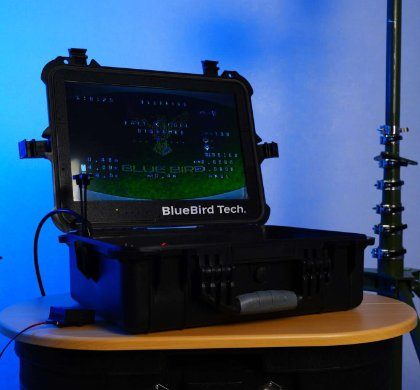
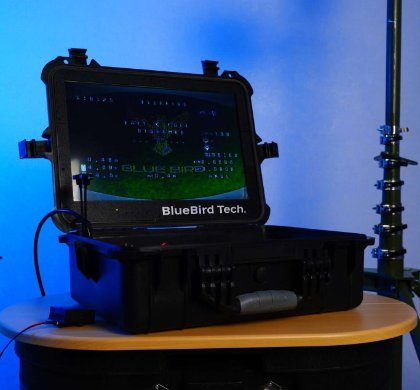
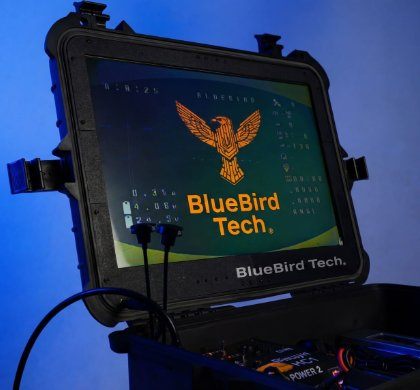
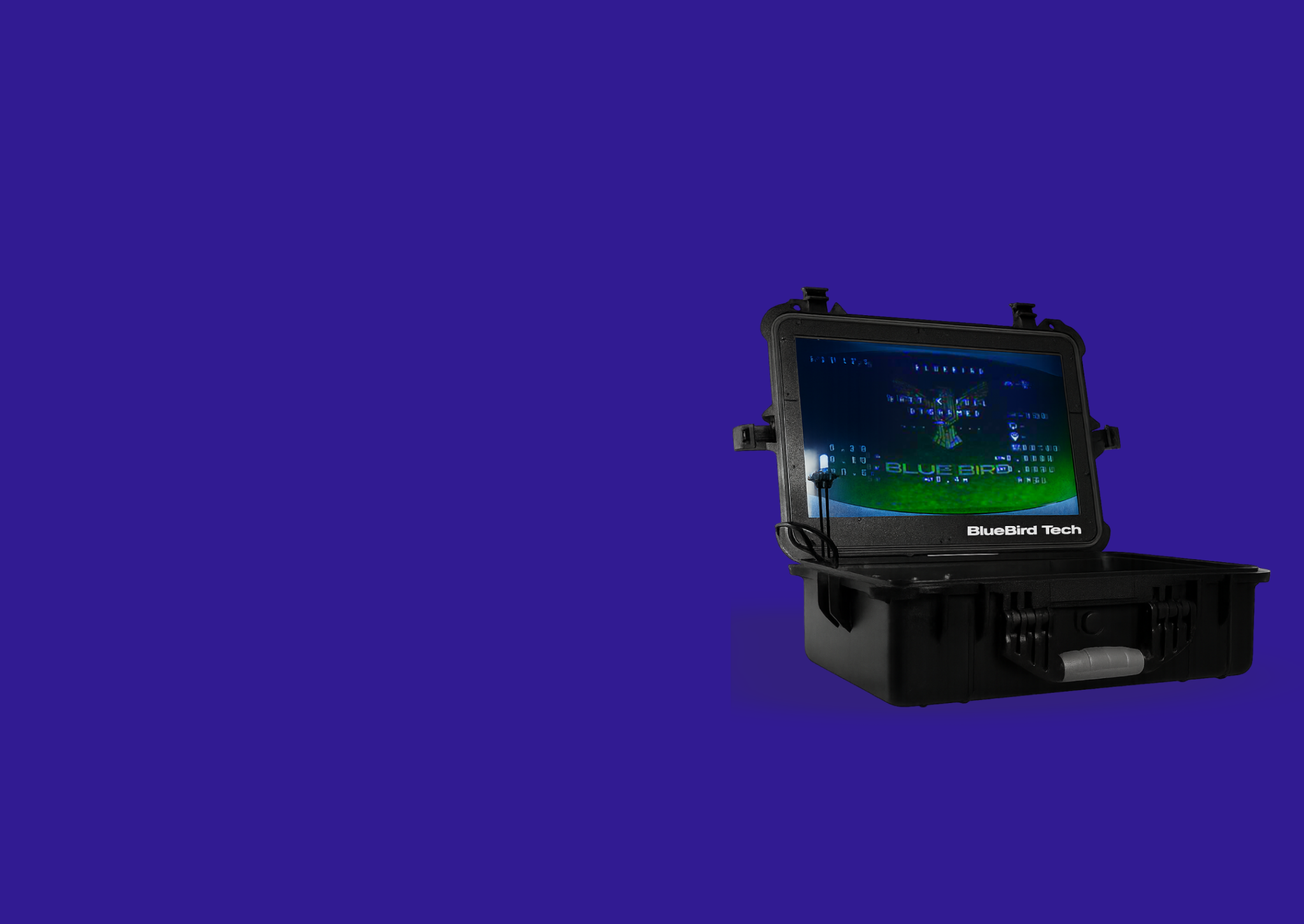
“Vishchun-K1B” control complex
- Range: up to 45 km
- Wireless link with pilot: up to 1 km
- Autonomy: up to 6 hours of work
- Nutrition: 2×6S2P station, 2×18650 remote module
A ground repeater is a device that acts as an intermediate communication node between the operator and the UAV. It receives the video signal from the drone and transmits control commands in the opposite direction, extending communication range and improving signal stability.
Ground repeater stations for stabilizing the signal and extending the communication range of unmanned systems in field conditions.
Ground repeater stations form a stable communication node between the operator and the UAV. The choice of a specific model depends on operating distance, drone type, frequencies, and usage conditions.
When operating UAVs, direct radio communication is often limited by terrain, buildings, or interference. Ground repeater stations allow you to:
The device receives the video signal from the drone, transmits it to the operator, and relays control commands in the opposite direction, enabling extended communication range and operation from a safe position while maintaining full control of the UAV.
Not sure which model or accessories are right for your specific task?
Contact us – we will help you choose the optimal solution and explain the technical details in simple terms. Phone: +38 073 864 04 07 For security reasons, please use only the official communication channels listed on the website.
A ground repeater is an intermediate communication node between an operator and a UAV that receives the video signal from the drone and transmits control commands in the opposite direction. Such systems are used to extend flight range and stabilize communication in areas with difficult terrain or radio interference. Ground repeaters help operators work from cover while maintaining control of FPV drones at long distances.
The “Vishchun” series ground stations and repeaters support FPV drone operations at distances of up to 25 km, depending on terrain conditions, antenna height, and equipment type. The wireless connection between the operator and the repeater can work at distances of up to 1 km under line-of-sight conditions. Using a telescopic mast helps improve signal stability and reduce connection losses.
A ground FPV control station receives the video signal from the drone via antennas, processes it, and transmits it to the operator’s monitor or FPV goggles. At the same time, the system relays control commands from the pilot back to the drone through a wireless communication channel. The use of external antennas and a mast improves signal quality and ensures more stable operation in field conditions.
The “Vishchun-K1” system includes the “Vishchun-HC1” ground station, the “Vishchun-5.8” repeater, a telescopic mast, antennas, batteries, connection cables, and a charging unit. The kit also contains auxiliary components for quick setup and system operation. This configuration enables rapid deployment of a full communication node for drone control.
Operating time depends on the specific model and system configuration. The “Vishchun-5.8” repeater supports up to 8 hours of autonomous operation, while the “Vishchun-HC1” ground station can operate for up to 6 hours on its standard batteries. This runtime allows the systems to be used during extended flight missions without constant connection to a power source.
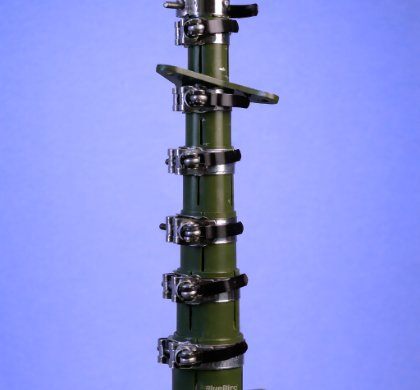
A telescopic mast is used to elevate antennas, repeaters, and other equipment to a height of up to 9 meters. Raising the system improves signal quality, extends operational range, and reduces the impact of interference. The mast is suitable for mobile positions, rapid deployment, and field operations.
“Vishchun” ground stations operate in the 5.8 GHz and 1.2 GHz frequency bands, depending on system configuration. Signal transmission and reception use antennas such as TrueRC and FOXEER Pagoda Pro, as well as SKYZONE Steadyview X 5G receivers. Some systems also support integration with ELRS, TBS, or LoRa modules for adaptation to different communication formats.
When selecting a ground repeater, it is important to consider flight range requirements, drone type, frequency band, and the intended use of the system. For mobile units, key factors include autonomy, rapid deployment, and system compactness. It is also important to evaluate video signal relay support, antenna compatibility, and the ability to operate in environments with radio interference.
A ground control station is used to receive the video signal from a UAV and transmit control commands from the operator to the drone. A ground repeater acts as an intermediate communication node between the operator and the UAV, helping to extend range and improve signal stability. For example, the “Vishchun-HC1” functions as a control station, while the “Vishchun-5.8” is used for signal relaying over long distances.
The “Vishchun-K1” and “Vishchun-K1B” systems have a similar architecture and include a ground control station, a repeater, and a telescopic mast. The main difference lies in the antenna equipment and operational range. The “Vishchun-K1” provides stable FPV drone control at distances of up to 25 km, while the “Vishchun-K1B” is equipped with higher-gain antennas and supports fixed-wing UAV operations, including the “Bebradrone,” at distances of up to 45 km. The choice of system depends on the UAV type, required communication range, and operating conditions.
The wireless link allows the operator to work at a distance of up to 1 km from the repeater or ground station. This helps set up the control position in a safer area and reduces risks for the crew during UAV operations.
The higher the antenna is installed, the less impact terrain, vegetation, and artificial obstacles have on signal quality. For this reason, ground repeater systems are often used with a telescopic mast of up to 9 meters, which improves video link stability and increases operational range.
BlueBird Tech ground repeater stations are designed for rapid field deployment. After setting up the mast, antennas, and power supply, the system is ready for operation within a few minutes, which is especially important for mobile units and quick position changes.
The “Vishchun-HC1” ground stations, “Vishchun-5.8” repeaters, “Vishchun-K1” and “Vishchun-K1B” systems, and telescopic masts can be purchased through official BlueBird Tech channels. When selecting equipment, it is important to consider operational range, UAV type, usage conditions, and the required level of autonomy.
The BlueBird Tech company offers advanced solutions for controlling unmanned aerial vehicles and ensuring stable transmission of video signals. Our products, including drone control stations, FPV repeaters and FPV video systems, are the result of years of research and innovation. We pride ourselves on the fact that each sample undergoes rigorous testing twice a week at a military range before being sent to the front.
Drone control stations from BlueBird Tech provide full control and monitoring of unmanned systems in any conditions. Our stations are characterized by:
Our FPV repeaters allow you to significantly increase the range and quality of video signal transmission from drones. Key benefits of BlueBird Tech FPV repeaters:
FPV video systems from BlueBird Tech provide clear and reliable real-time video for effective drone control. The main characteristics of our FPV video systems:
Our clients appreciate us for innovative technologies, high quality and reliability of products. We are constantly improving our solutions to meet the highest standards and ensure maximum effectiveness in real combat conditions. Our rigorous field testing ensures that all products are ready for use on the front line.
If you are interested in purchasing drone control stations, FPV repeaters or FPV video systems, please contact us for advice and more information. Our team is always ready to help you choose the best solution for your needs.
BlueBird Tech is your reliable partner in the field of unmanned systems and electronic warfare.