


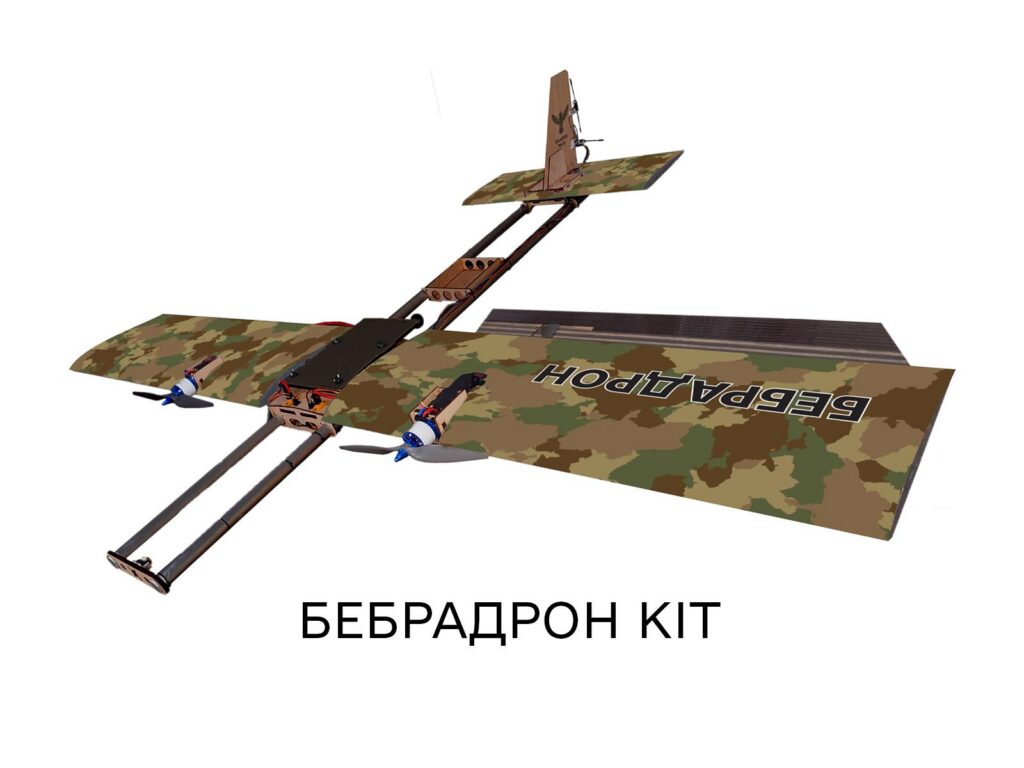
Fixed-wing UAV Bebradrone Kit
UAV Bebradrone Kit is a versatile fixed-wing unmanned aerial platform for crews, engineers, and units that need maximum flexibility in equipment selection.


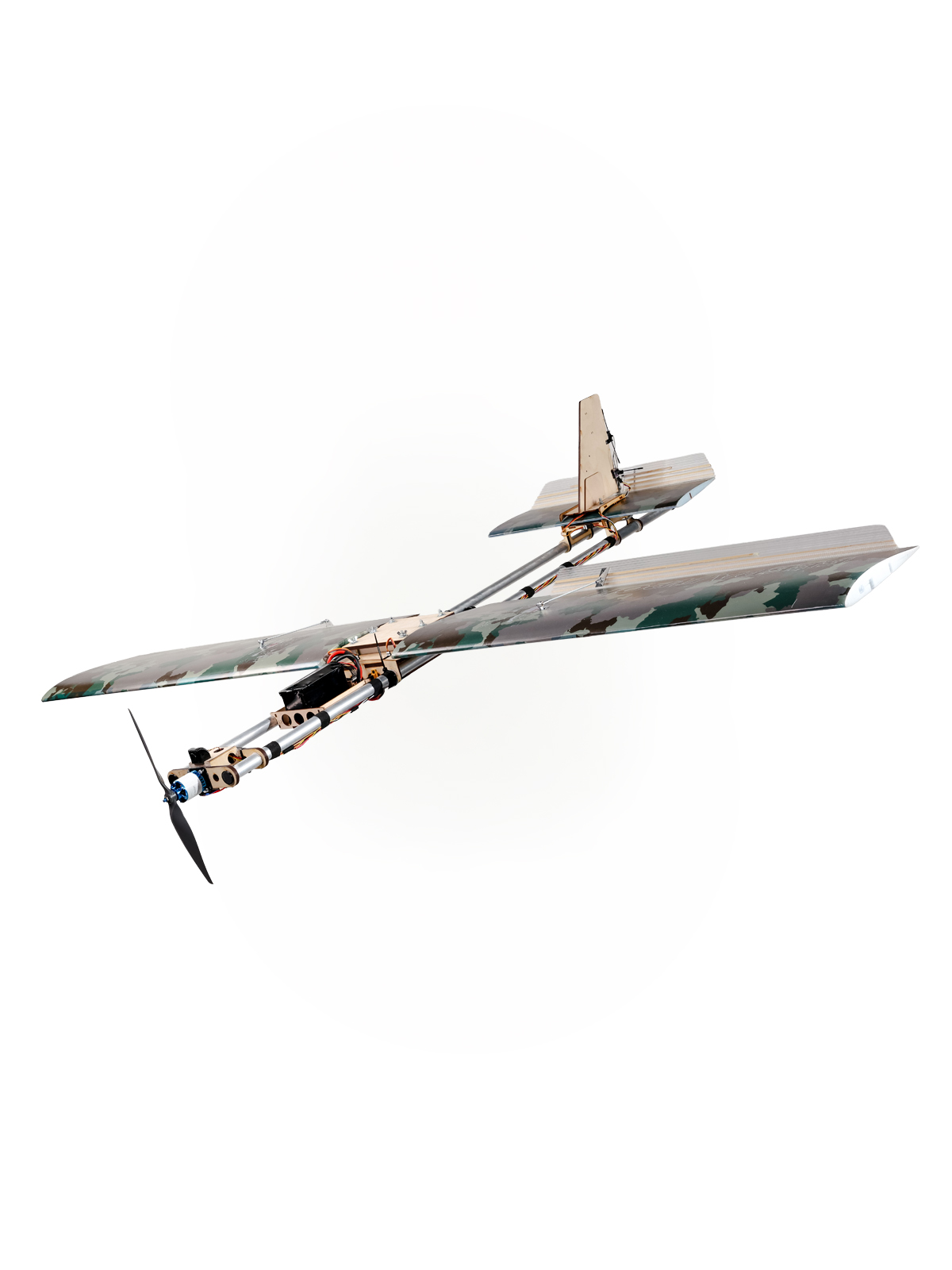
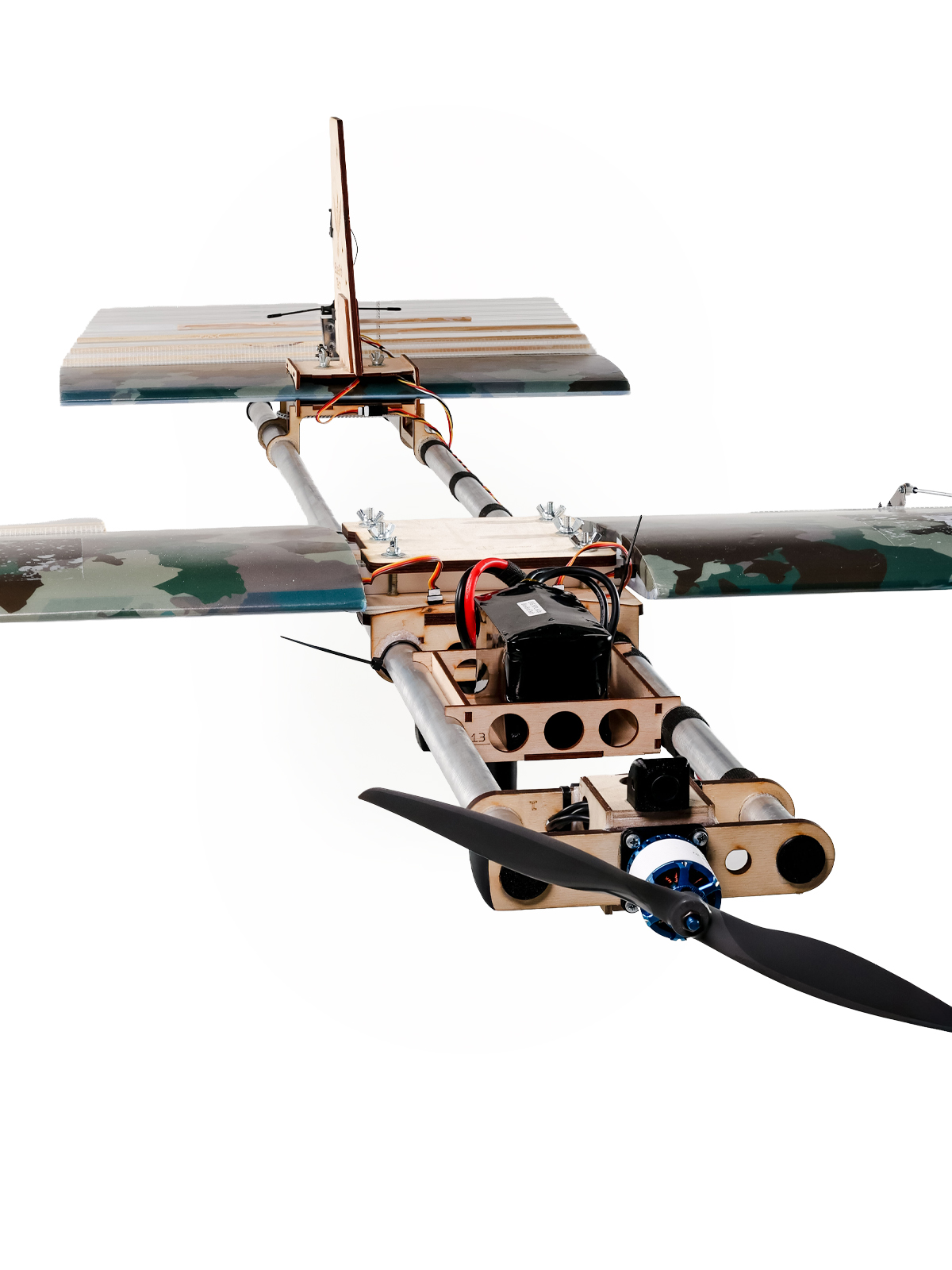
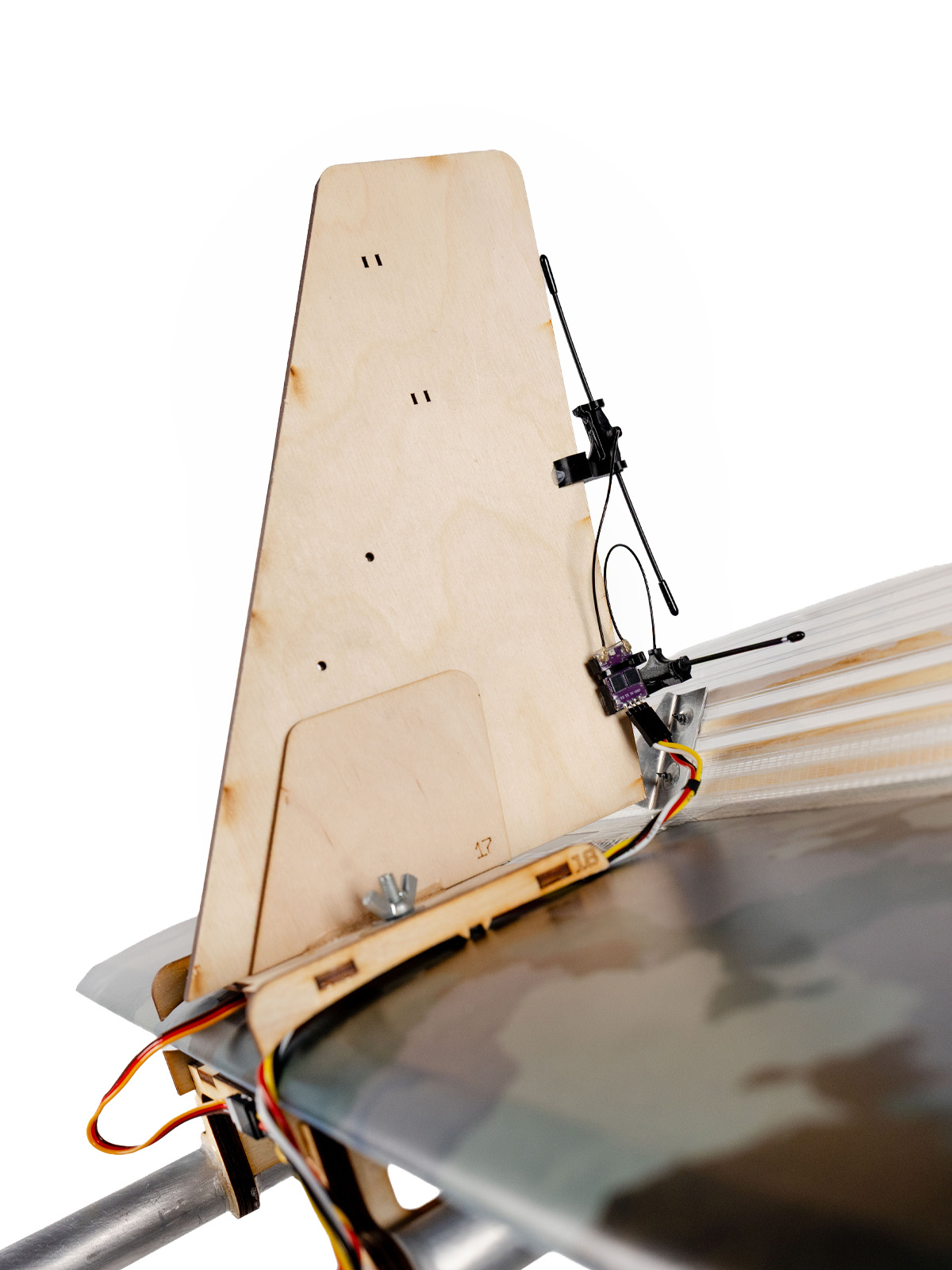

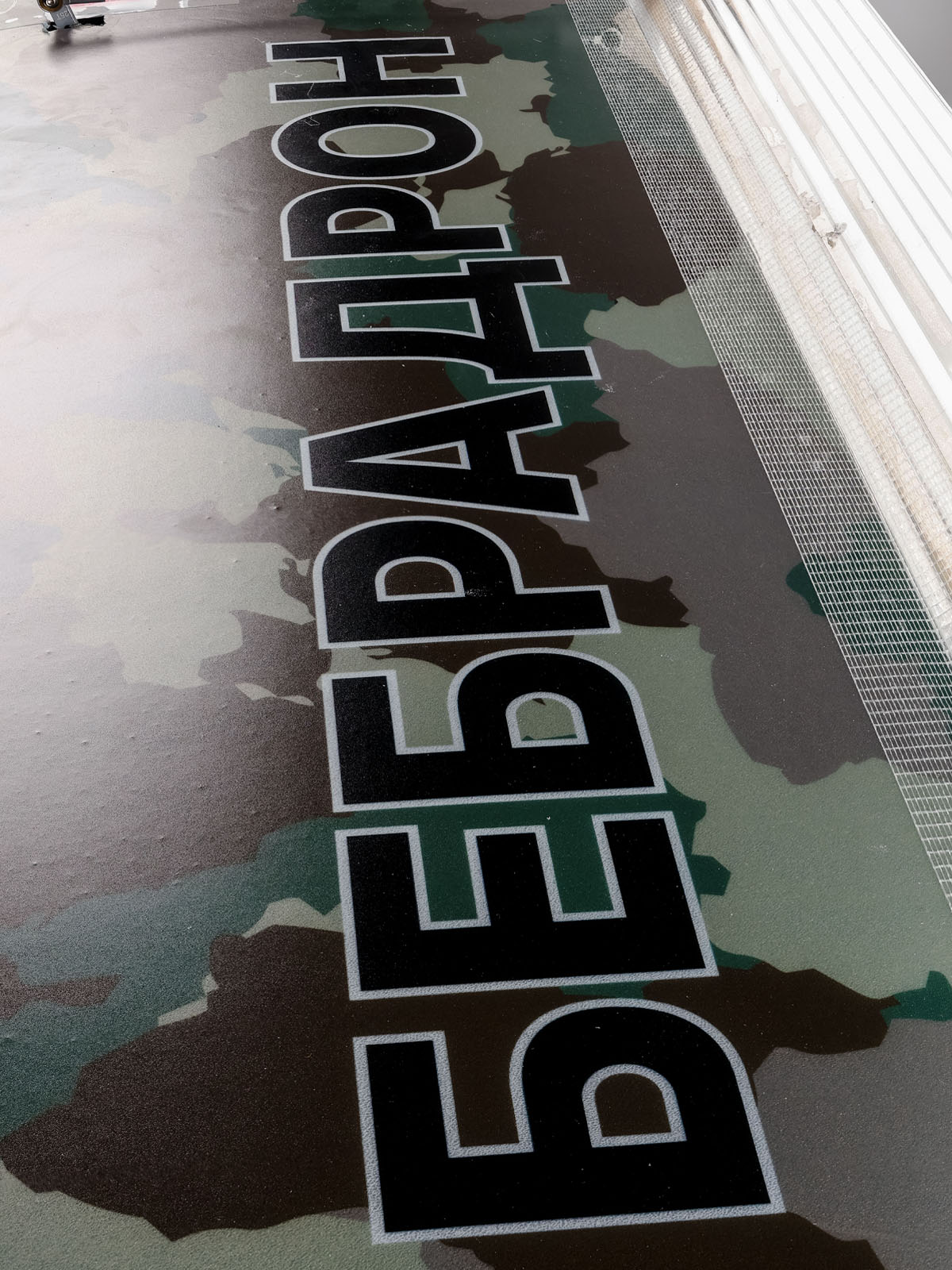
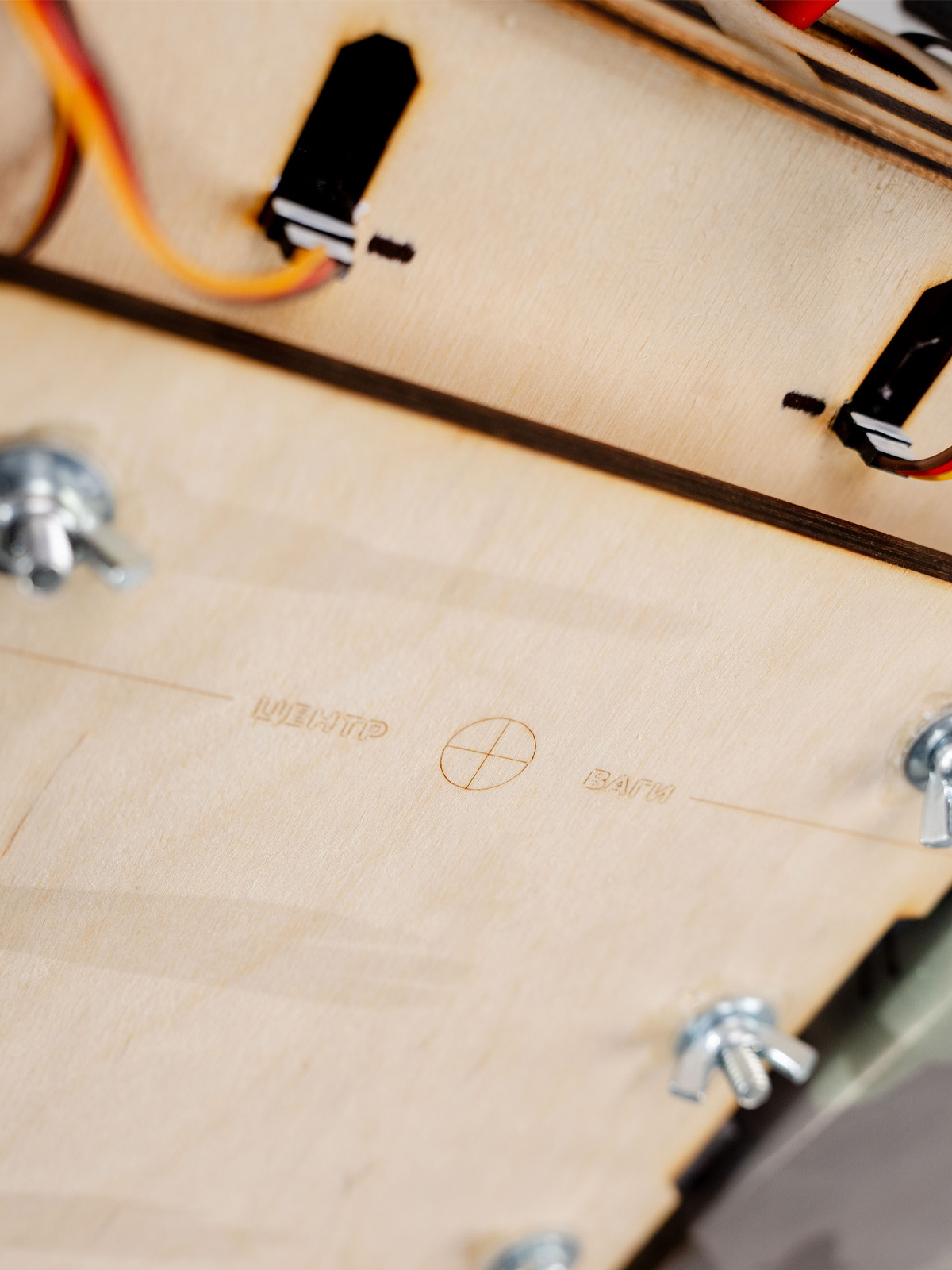

Bebradron Target UAV is a versatile and cost-effective fixed-wing unmanned aerial vehicle designed to perform a wide range of training, combat, and tactical missions.
|
Parameter |
Value |
|
Cruising speed |
70 km/h |
|
Maximum speed |
115 km/h |
|
Flight time |
Up to 25 min |
|
Camera type |
Daylight (twilight) |
|
Payload |
Up to 2 kg |
|
Operational range |
Up to 30 km |
|
Navigation |
None; installed upon request |
|
Launch type |
Pneumatic catapult |
|
Video link |
Analog, 5.8 GHz |
|
Battery |
6S3P |
|
Operating altitude |
200–700 m |
|
Control |
915 MHz or another frequency upon request |
|
Automatic takeoff |
Yes |
|
Cruise control |
Not available for safety reasons |
Bebradron Target UAV is a versatile and cost-effective fixed-wing unmanned aerial vehicle designed to perform a wide range of training, combat, and tactical missions. Thanks to its well-balanced design, the platform can be used to train personnel, FPV interceptor operators, and mobile fire team crews, as well as to carry out designated missions in a combat zone.

The following options are available upon request:
The cost of optional configurations is calculated individually.

Delivery is carried out via Nova Poshta.
Warranty for the Bebradron Target UAV is 12 months from the date of purchase.
Warranty service is provided by the manufacturer’s service center, BlueBird Tech.
The warranty does not cover defects resulting from:
The company accepts returns and exchanges in accordance with applicable law.
Returns are accepted within14 days of receipt(for products of satisfactory quality).
Return shipping is arranged by mutual agreement.
Under applicable law, you may return or exchange a product of satisfactory quality if:
Full payment.
Pay for the order in full and collect it from the post office.
BlueBird Tech is a Ukrainian manufacturer of defense engineering electronics that develops and mass-produces defense solutions. Our goal is to create technologies that protect lives and provide Ukraine with an advantage on the battlefield.
To learn more about who we are and our journey, visit the “About Us” page.
 Firmware update
  Offline access to instructions,



that our original BlueBird Tech devices can only be purchased from us, on the manufacturer’s official website: blue-bird.tech
and on the official websites of our partners: flasharmy.com.ua, market.brave1.gov.ua, bezpeka.pro




 Has NATO codification
 Has NATO codification
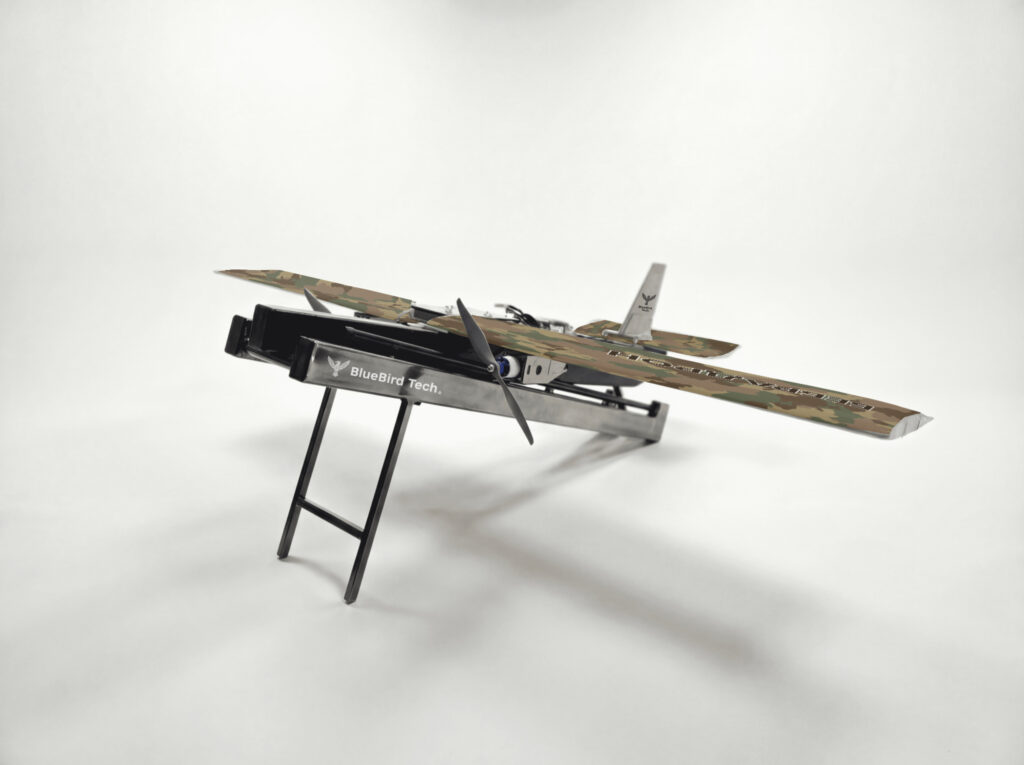
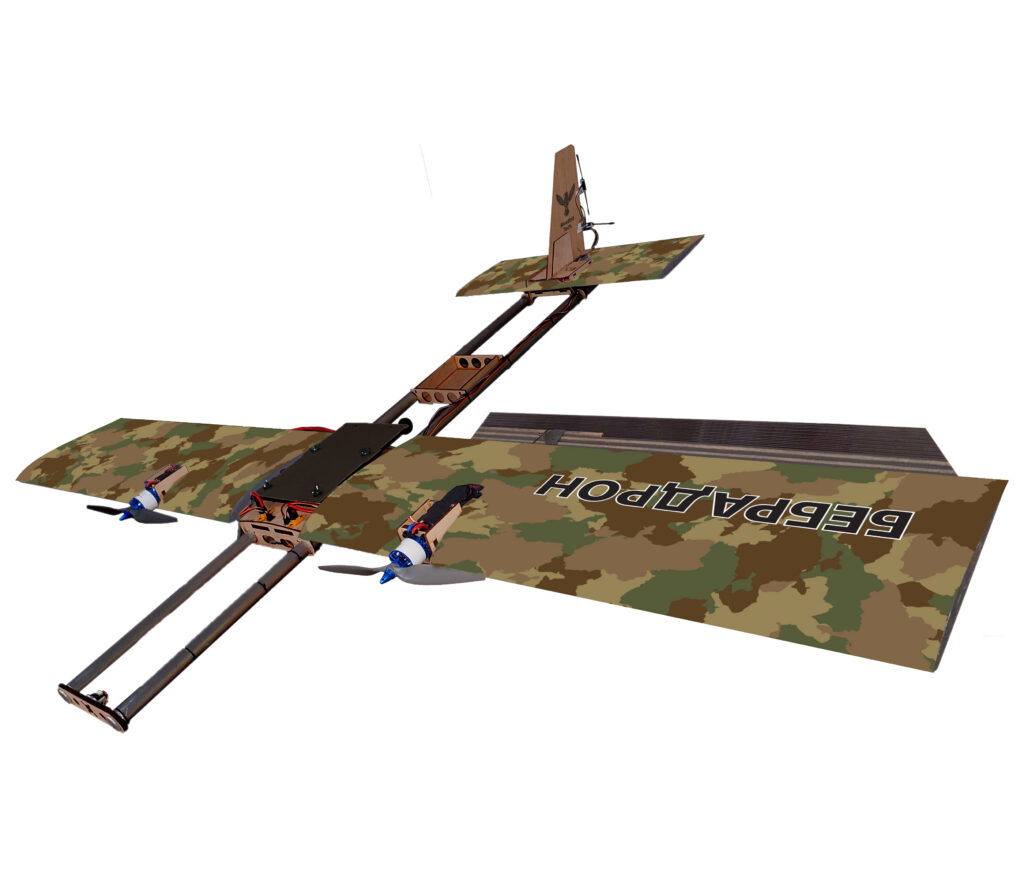
The UAV Bebradrone-M is a fixed-wing unmanned aerial vehicle designed for practical pilot training, interceptor drone operator training, and aerial target simulation. The aircraft enables training in conditions close to real-world scenarios and allows operators to practice controlling fixed-wing UAVs without the need for specialized platforms.
After preparation, the UAV is mounted on a pneumatic catapult and launched into the air. Following automatic takeoff, the operator controls the aircraft via a radio link and receives analog video from the onboard camera. Depending on the mission scenario, the UAV performs a training flight, serves as a dynamic aerial target, or carries a payload.
The aircraft is used to train pilots to operate fixed-wing UAVs, conduct practical training at training centers, prepare interceptor drone operators, and test aerial target detection and tracking systems. The UAV can also be used to simulate aerial situations and create additional aerial targets as part of defined scenarios.
The UAV has a cruising speed of 70 km/h and a maximum speed of up to 115 km/h. It can remain in the air for up to 25 minutes, operate at an altitude of 200–700 m, and perform missions within a range of up to 30 km. The maximum payload capacity is up to 2 kg.
The aircraft has an operational range of up to 30 km and a flight time of up to 25 minutes. Actual performance depends on the installed equipment, payload weight, battery condition, weather conditions, terrain, radio interference, and flight mode.
The UAV can carry a payload weighing up to 2 kg. The type of equipment, installation method, and permitted configuration are determined according to the mission requirements. Before launch, check that the payload is securely mounted and that the aircraft is properly balanced.
The UAV is launched using a pneumatic catapult. After the aircraft is installed, the systems are checked, and the UAV is switched to operating mode, an automatic takeoff is performed. Once the initial launch phase is complete, the operator continues to control the aircraft via the radio link.
In the basic configuration, the UAV is controlled at 915 MHz, while the analog video signal is transmitted at 5.8 GHz. At the customer’s request, other compatible control and video-link systems can be installed. The final configuration and cost are calculated individually.
The UAV is equipped with a daylight/twilight camera that transmits analog video in real time. The camera is designed for flight control in daylight conditions as well as in low-light environments.
The basic configuration does not include a navigation system, but one can be installed upon the customer’s request. The UAV supports automatic takeoff from a pneumatic catapult. Cruise control is not available for safety reasons, so the operator must continuously monitor and control the aircraft during flight.
The aircraft is recommended for pilots who have completed a basic UAV operator training course, trained using a flight simulator, or already have practical experience operating fixed-wing unmanned aerial vehicles. The UAV can also be used under instructor supervision during hands-on trainee training.
Yes. The aircraft can serve as a realistic moving aerial target for training FPV interceptor operators. This allows them to practice visual detection and tracking, closing in on the target, attack-approach maneuvers, positioning in the target’s rear hemisphere, interception, and automatic target-acquisition (EVS) algorithms under controlled, near-real-world conditions.
Yes. At the customer’s request, the UAV can be equipped with a navigation system, the control frequency or video-link configuration can be changed, and other compatible components can be added. The final equipment configuration and cost are determined after the technical requirements have been agreed upon.
The original UAV Bebradrone-M can be purchased through the official BlueBird Tech website. For advice on specifications, configuration, production lead times, and purchasing terms, call +38 073 864 04 07. For your security, please use only the official contact channels listed on the website.
Under subparagraph 5 of paragraph 32 of subsection 2 of Section XX of the Tax Code of Ukraine, certain defense-related products may be supplied without VAT if the final recipient is a law enforcement agency, the Ministry of Defense of Ukraine, the Armed Forces of Ukraine, the National Guard of Ukraine, the Security Service of Ukraine, the State Border Guard Service of Ukraine, the National Police of Ukraine, volunteer formations of territorial communities, other military formations established in accordance with Ukrainian law, other entities within the security and defense sector, or enterprises acting as contractors or subcontractors under state defense contracts.
To apply the VAT-exempt price, it is necessary to provide documentary confirmation that the products are being purchased specifically for defense purposes. An end-user certificate serves as such confirmation.
Being a member of the military, a police officer, or an employee of another security agency does not, by itself, entitle an individual to purchase a product without VAT. If a product is purchased by an individual for personal use, it is sold at the standard VAT-inclusive price in accordance with the requirements of the Tax Code of Ukraine.
A VAT-exempt purchase is possible only if an end-user certificate is provided stating that the final recipient of the product will be a law enforcement agency, the Ministry of Defense of Ukraine, the Armed Forces of Ukraine, the National Guard of Ukraine, the Security Service of Ukraine, the State Border Guard Service of Ukraine, the National Police of Ukraine, volunteer formations of territorial communities, or other military formations established in accordance with Ukrainian law.
A contract may also be concluded with a legal entity, charitable foundation, or non-governmental organization, provided that an end-user certificate is supplied confirming that the products will be transferred for defense purposes.
A tripartite agreement may also be used, under which one party makes the payment (for example, a charitable foundation, non-governmental organization, individual entrepreneur, or company), the second party is the product supplier — BlueBird Tech, and the third party is a law enforcement agency, the Ministry of Defense of Ukraine, the Armed Forces of Ukraine, the National Guard of Ukraine, the Security Service of Ukraine, the State Border Guard Service of Ukraine, the National Police of Ukraine, a volunteer formation of a territorial community, or another military formation established in accordance with Ukrainian law.
To determine the most appropriate purchasing arrangement, we recommend contacting our managers and specifying who will make the purchase: a military unit, a charitable foundation, a non-governmental organization, an individual entrepreneur, a company, or an individual.
An end-user certificate is a document confirming that the final recipient of the products will be a law enforcement agency, the Ministry of Defense of Ukraine, the Armed Forces of Ukraine, the National Guard of Ukraine, the Security Service of Ukraine, the State Border Guard Service of Ukraine, the National Police of Ukraine, volunteer formations of territorial communities, or other military formations established in accordance with Ukrainian law.
The end-user certificate confirms the defense-related purpose of the purchase and allows the VAT-exempt tax regime to be applied in cases provided for by Ukrainian law.
If an end-user certificate is not provided, we are required to process the sale at the standard price including VAT.
Увійдіть тим самим акаунтом, що й у застосунку Чуйка та програмі Blue Coins.


